
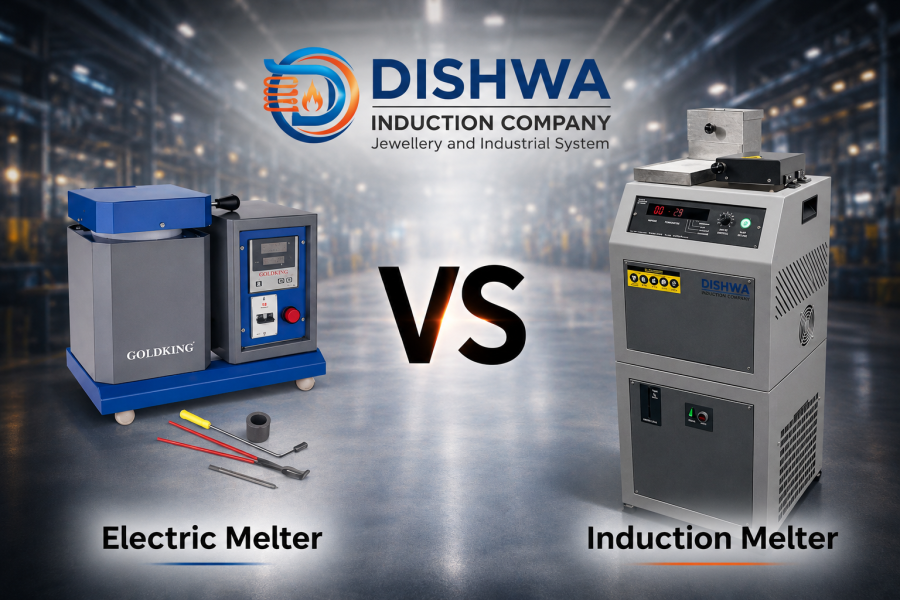
| Feature | Induction Melting Machine | Electric (Resistance) Melting Machine |
|---|---|---|
| Heating Method | Uses electromagnetic induction to heat metal directly without contact. | Uses resistance coils or heaters to heat the crucible, which then melts the metal. |
| Melting Speed | Much faster due to direct heating of metal. | Slower because heat is transferred indirectly through the crucible. |
| Energy Efficiency | High efficiency (less energy wasted). | Less efficient; more energy lost as heat to surroundings. |
| Temperature Control | Precise and easy to control. | Temperature control is less precise; slower response. |
| Metal Loss / Oxidation | Minimal oxidation; cleaner melt. | Higher chance of oxidation due to longer heating time. |
| Safety | Safer; less risk of fire or burns. | Slightly higher risk due to open heating elements. |
| Maintenance | Low maintenance; fewer wear-and-tear parts. | Higher maintenance; heating elements and crucibles wear out faster. |
| Initial Cost | Higher upfront cost. | Generally lower upfront cost. |
| Applications | Jewelry, small-scale refineries, precise melting of precious metals. | General metal melting, larger industrial applications. |
Summary:
Induction melting machines are faster, more efficient, and better for precious metals like gold and silver.
Electric melting machines are simpler and cheaper but slower and less precise, suitable for general metal melting.