
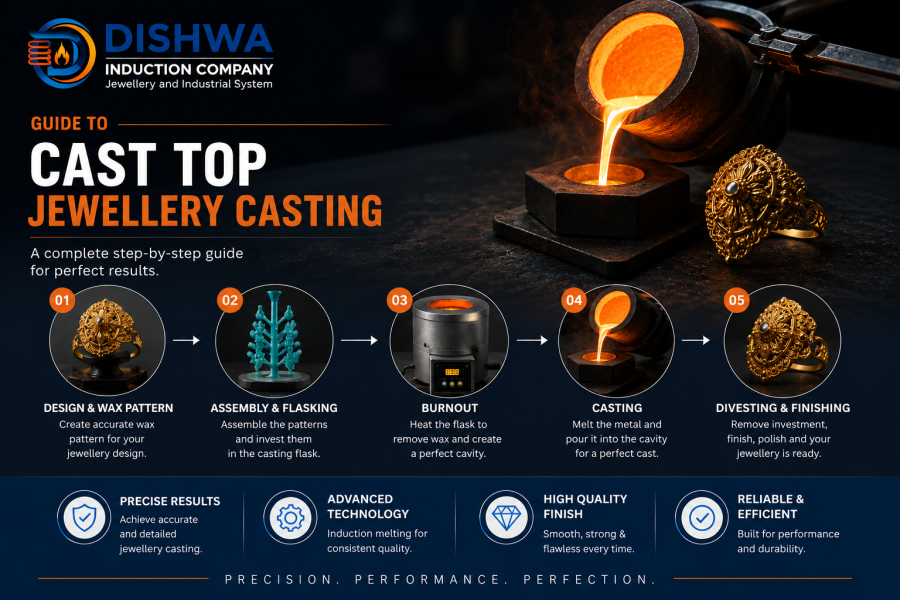
Concept & CAD Model: Start with a precise design using CAD software. Ensure all details are optimized for casting.
Prototype / Master Model: Create a master model in wax or resin. For intricate designs, use high-resolution 3D printing.
Check for Under-Cuts: Ensure designs don’t have sharp undercuts that can trap metal or break during casting.
Sprucing: Attach sprues to the model to allow metal flow. Proper sprue placement ensures uniform filling.
Investing: Mix high-quality investment powder with water/resin per manufacturer instructions. Pour around the model carefully to avoid bubbles.
Vacuuming: Place the invested mold in a vacuum chamber to remove trapped air bubbles, ensuring smooth surfaces.
Setting: Let the investment set and dry completely to avoid cracks.
Wax / Resin Removal: Place the mold in a burnout furnace or kiln. Follow the correct heating schedule to completely remove wax/resin.
Temperature Ramp: Gradually increase temperature to avoid mold cracking. Typical burnout temperatures: 500–900°C depending on the investment.
Choose Metal: Gold, silver, platinum, or alloys.
Melting Method: Use an induction melting machine for fast, uniform, and precise melting.
Temperature Control: Ensure proper metal temperature to avoid incomplete casting or oxidation.
Vacuum Casting:
Vacuum: Uses vacuum to pull metal into fine details. Ideal for intricate jewelry.
Pouring: Slowly pour molten metal to minimize turbulence and air pockets.
Cooling: Let the mold cool completely to prevent warping.
Remove Investment: Break away the mold to reveal the cast piece. Use gentle tools to avoid scratches.
Cut Sprues: Trim off sprues and any excess metal.
Filing & Sanding: Smooth rough edges and surfaces.
Polishing: Use polishing wheels, compounds, or ultrasonic cleaners for a perfect shine.
Optional Plating or Stone Setting: Complete the piece with plating, enameling, or gemstones.
Inspect for:
Surface defects or bubbles
Accurate dimensions
Strength and durability
Proper detail replication